Common Mistakes in Faraid Distribution and How to Avoid Them
Estate Administration

•
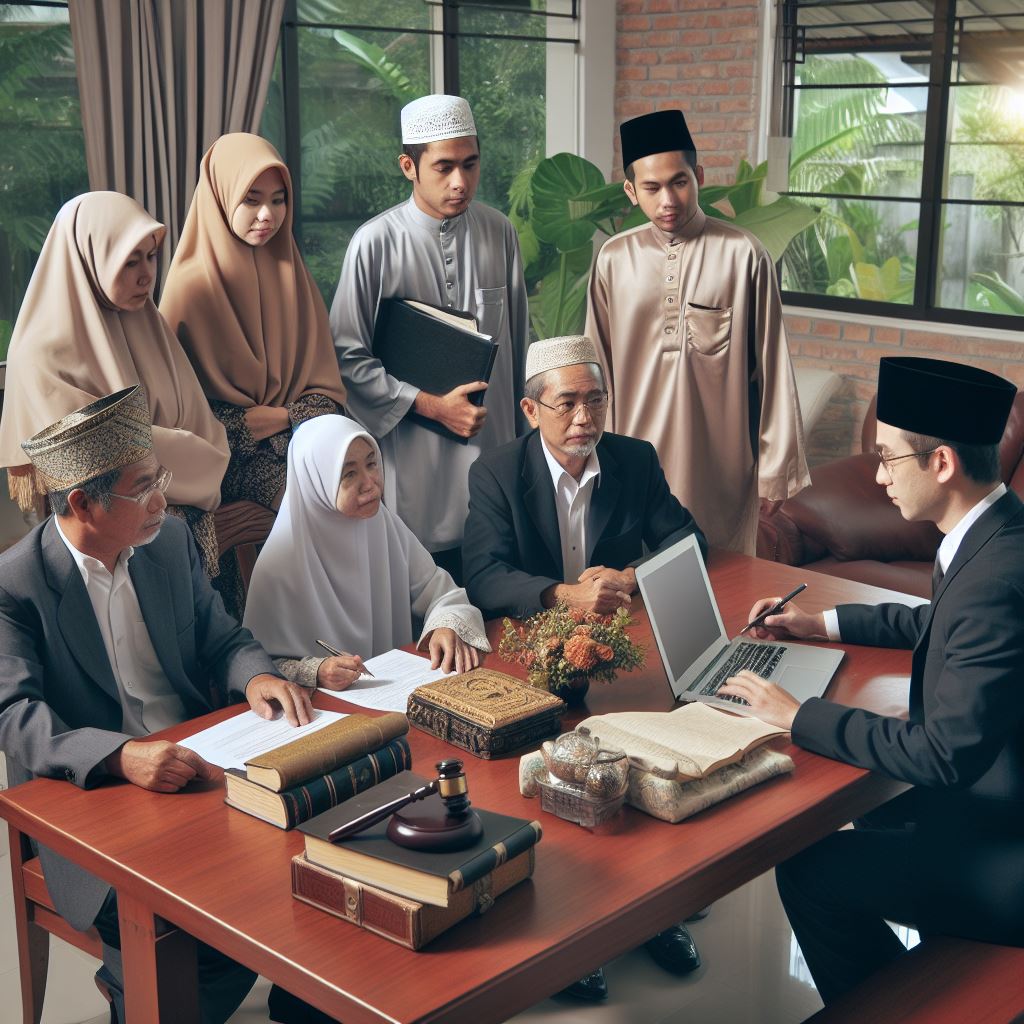
Most faraid problems in Malaysian families come from a handful of repeat mistakes. Families divide assets before anyone has legal authority, forget debts and other claims that come before faraid, treat a nominee as the owner, or rely on a verbal family agreement instead of the formal process. Each one can leave heirs with a frozen asset, an unfair split or a dispute that surfaces years later.
Faraid sets out who inherits from a Muslim and in what shares. But the shares are only one part of the job. The estate still has to be settled in the right order and transferred through the proper legal channel. Below are the most common mistakes and how to avoid them.
1. Getting the shares wrong because the heirs are misidentified
Faraid shares follow fixed rules based on each heir's relationship to the deceased. A wife, for example, takes one-eighth if the deceased left children and one-quarter if there were none. A son takes twice the share of a daughter. Families often get the shares wrong because they:
leave out heirs who are entitled, such as the deceased's surviving parents,
include people who are not heirs in that situation, or
assume the shares are the same in every family.
How to avoid it: list every surviving relative before anyone does any sums. Then get a faraid certificate (Sijil Faraid) from the Syariah Court, which is the official record of who the heirs are and their shares. Online faraid calculators are useful for a rough idea, but they are not a substitute for the certified position for your family.
2. Dividing assets before anyone has legal authority
It is common for siblings to "agree" who gets the house, the car or the money in the bank soon after the funeral, and start using or dividing them. The problem is that no one has legal authority over the deceased's assets until the proper document is issued. Depending on the estate, that could be:
a grant of letters of administration (or probate) from the civil High Court,
a small estate distribution order from the Land Administrator (Small Estate Distribution Unit), for estates up to RM5 million, or
a summary administration through Amanah Raya Berhad, for certain estates with movable assets only.
Banks, land offices and the EPF (Employees Provident Fund, or KWSP) will generally not release or transfer assets without these documents.
How to avoid it: treat any family discussion as a plan only, until the correct order or grant is in hand. Do not sell, pledge or give away estate property before then.
3. Forgetting what must be settled before faraid
Faraid applies to what is left after certain things are paid or dealt with. The Selangor Islamic Religious Council (MAIS) sets out this order:
funeral expenses,
the deceased's debts,
any harta sepencarian (jointly acquired matrimonial property) claim by a surviving spouse,
any valid wasiat (Islamic will), and
distribution of the balance to the heirs by faraid.
Families often skip straight to step 5. That can mean a creditor or a spouse's harta sepencarian claim appears later, after the assets have already been shared out.
How to avoid it: list the debts (loans, credit cards, unpaid bills) and ask whether a harta sepencarian claim applies before working out the shares.
4. Misunderstanding what a wasiat can do
Two opposite mistakes are common. Some families ignore a valid wasiat altogether. Others treat a wasiat as if it can rewrite faraid.
According to MAIS, a wasiat is limited to one-third of the net estate (after funeral costs and debts). It cannot be made in favour of an heir unless the other heirs consent. A wasiat that gives everything to one child, for example, will not simply take effect as written.
How to avoid it: check whether the deceased left a wasiat, where it is kept, and whether it stays within these limits. If it goes beyond them, get advice on what can be carried out.
5. Treating a nominee as the owner
Many people see a nomination as "a will" for that asset. For EPF savings, the EPF states that a Muslim member's nominee acts as a wasi (administrator) who must distribute the savings to the rightful heirs under Islamic law. A nominee who keeps the whole amount when other heirs are entitled is making a serious mistake.
Other nominations, such as those for takaful, insurance or cooperative shares, have their own rules. Do not assume they all work the same way.
How to avoid it: for each asset with a nominee, check what the nomination means under that institution's rules before the money is spent.
6. Relying on an informal family agreement
Heirs are allowed to agree a different arrangement among themselves, for example one heir taking the house and paying the others. This is known as takharuj or mutual agreement. The mistake is leaving it as a verbal understanding.
A verbal agreement is easy to deny later, does not transfer title, and may not bind an heir who was a minor or was not present. Problems often surface when one heir dies and their own heirs dispute what was "agreed".
How to avoid it: make sure any agreement is recorded properly and reflected in the distribution order or vesting order issued by the authority handling the estate. Every heir who gives up a share should do so with full knowledge and consent.
7. Leaving out heirs for personal reasons
Some families try to leave out an heir because of an old quarrel, a lifestyle they disapprove of, or because the heir lives far away. An heir's faraid entitlement does not depend on the family's approval. Leaving someone out usually leads to objections, delay, or the order being challenged.
How to avoid it: identify every heir and involve them in the process, even if the relationship is difficult.
8. Delaying the process for years
It is tempting to leave the estate alone to avoid tension. But delay tends to create "layered" estates. When an heir dies before the first estate is settled, their share has to go through their own estate, with more heirs, more documents and more cost. Land can also stay in the deceased's name, which blocks sale, financing or development.
How to avoid it: start the process once the family has had time to grieve, and do not leave it indefinitely.
9. Not discussing the estate openly
When emotions run high, some heirs are not consulted, or information about assets is kept from them. Even a correct distribution can be resented if people feel excluded.
How to avoid it: share the list of assets, debts and documents with all the heirs. Where tension is already high, a neutral third party such as a lawyer can help keep the discussion focused on the facts and the process.
How ASCOLAW can help
ASCOLAW can help heirs identify the correct administration route, prepare the documents, and deal with issues such as debts, nominated assets and agreements among heirs before the estate is distributed. Fill in the ASCOLAW enquiry form below and our team will contact you.
Frequently asked questions
Can we just divide the assets among ourselves without going to any office?
You can agree among yourselves how things should be shared. But assets such as land, bank accounts and EPF balances can only be released or transferred with the proper grant or order. The agreement should be reflected in that order.
Does the Syariah Court distribute the estate?
The Syariah Court certifies faraid matters, such as who the heirs are and their shares, and decides related Islamic law issues. Grants and distribution or vesting orders come from the civil High Court, the Land Administrator (small estates) or Amanah Raya Berhad, depending on the route.
If Dad nominated Mum for his EPF, is the money all hers?
Not necessarily. For a Muslim member, the EPF treats the nominee as a wasi who must distribute the savings to the heirs under Islamic law. Mum keeps her own faraid share, and the balance goes to the other heirs.
Can one heir give up their share to another?
Yes, heirs can agree to a different arrangement. The agreement should be made with full knowledge and recorded properly in the formal process, not left as a verbal promise.
Should debts be paid before the estate is shared?
Yes. Funeral expenses and the deceased's debts come first, followed by any harta sepencarian claim and any valid wasiat, before the balance is distributed by faraid.
This article is general information, not legal advice or a religious ruling. Faraid shares depend on the heirs of the particular deceased and are determined by the Syariah Court's faraid certificate or order for that family. Procedures and limits can change and may differ in Sabah and Sarawak.
Related guides
Disclaimer
The content on this website is provided for general information and educational purposes only. It does not constitute legal advice and should not be relied upon as a substitute for a consultation with a qualified lawyer. Every legal matter is unique. You are strongly encouraged to obtain advice tailored to your circumstances from a licensed legal practitioner before taking any action based on the information provided here.
Although we strive to keep this content accurate and up to date, ASCOLAW and its affiliates make no representation or warranty, express or implied, regarding the completeness, accuracy, reliability, suitability or availability of the information on this website. Any reliance you place on that information is entirely at your own risk.
Author
AKMAL SAUFI MOHAMED KHALED
Managing Partner & Founder
Related Articles
Lost the Death Certificate? What Heirs Should Do Before Estate Administration
Death Certificate and Estate Administration: What Heirs Should Know
Family Conflict Over Faraid Distribution: How Can Heirs Resolve It?
Faraid Distribution Checklist: What Heirs Should Prepare and Check
Estate Distribution in Malaysia: Heirs' Rights, Administration and Procedure
Is Faraid Fair? Understanding the Religious Basis of Islamic Inheritance
How Can Heirs Claim a Deceased Person's EPF Savings in Malaysia?
Estate Assets Frozen After Death: What Should the Heirs Do?
What Should a Wife Know About Faraid for Her Husband's Estate?
Women's Rights in Faraid Distribution: Myths and Facts