Former Spouse Refuses to Sign After a Harta Sepencarian Order: What Happens Next?
Family Law
Real Estate

•
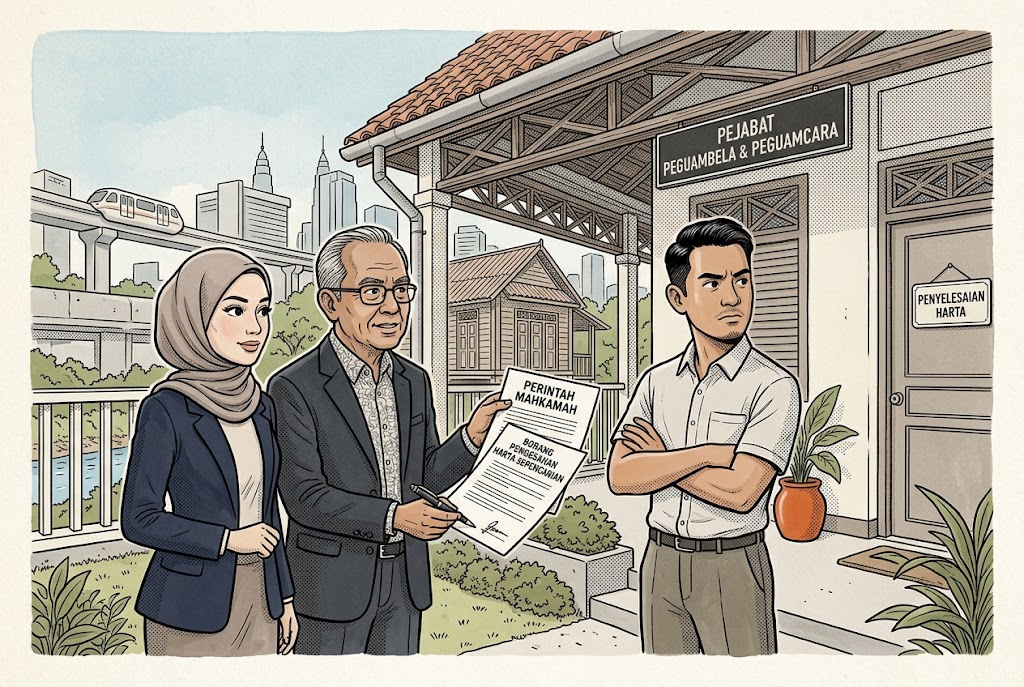
The Syariah Court has made a harta sepencarian (matrimonial property) order. The house was supposed to be transferred, sold or settled on the terms set by the court. But your former spouse doesn't answer messages, won't turn up to sign, or says they don't want to go ahead. Does everything stop?
When a former spouse refuses to sign after a harta sepencarian order, the next step is not to sign on their behalf, and not to assume a particular remedy is automatically available. A lawyer needs to check what the order actually requires, exactly what is being refused, the title and loan position, the evidence of communication, and the implementation or enforcement methods available under the procedure that applies.
"A refusal to sign is not automatically a dead end, but it also isn't something you can solve by signing for the other person. A lawyer has to read the order first to know what mechanism is actually available," says Akmal Saufi Mohamed Khaled, lawyer and principal of ASCOLAW (Messrs Akmal Saufi & Co).
Quick summary
A refusal to sign is not a dead end, but it cannot be solved by signing for the other party or by guesswork.
Separate refusing to comply (deliberately saying no) from being unable to comply (documents incomplete, bank not yet approved, and so on). Each calls for a different response.
The usual sequence: read the obligations in the order, collect evidence of communication, make a formal request, and if it is still stuck, assess enforcement or further directions from the court.
A court order carries weight, but how you deal with a refusal depends on the wording and the facts. Some files only need clearer coordination of documents. Some need a formal demand for compliance. Others need further directions or orders before the property can move.
Keep in mind that Islamic family law is state law. Each state has its own Islamic family law and Syariah civil procedure legislation, so the enforcement options, forms and court practice depend on which state's court made the order.
Summary: type of refusal and the first step
Type of refusal | Suitable first step |
|---|---|
Refuses to sign the transfer instrument | Check the exact obligation in the order and any time limit |
Won't hand over original documents (IC, title) | Check whether the order requires them to be handed over, and when |
No response at all, or cannot be traced | Collect evidence of attempts to contact; check the last known address |
Disputes what the order means | Get advice on clarification or further directions, not a new claim |
Says they are "unable" (bank not approved, etc.) | Check whether the reason is genuine before treating it as deliberate refusal |
First: what exactly is your former spouse refusing to do?
"Won't cooperate" can mean many things:
refusing to sign the transfer instrument;
refusing to hand over original documents;
not providing a copy of their identity card or bank details;
refusing to attend before a lawyer for witnessing;
not agreeing to the sale of the house;
refusing to pay an amount ordered;
not cooperating with a redemption or refinancing;
blocking a valuation of the property;
not responding at all; or
disputing how the order should be read after it was made.
Each of these needs a different diagnosis. If the real problem is that the bank has not approved the refinancing, it is not purely a signature problem. If the title has a restriction in interest, a consent that has not been obtained cannot be fixed just by pressing your former spouse.
Before choosing a course of action, state precisely: which document, which action, who has to do it, and which dates have passed.
1. Read the obligations in the order, not just the outcome
A lawyer will read the full order to find:
the outcome directed for the house;
the specific obligations of each party;
any share or amount to be paid;
the sequence between payment, signing and transfer;
any time limit for implementation;
who must prepare the documents;
any mechanism if one party fails to act; and
any conditions about the loan, a sale or a valuation.
For example, an order stating "the house is awarded to A" does not necessarily answer every practical question. Does A have to pay B's share? Must the loan be taken over? Is B required to sign a particular instrument? Must the house be sold if financing cannot be arranged?
The lawyer will also check whether the order is complete and sealed, and whether there is an appeal, a stay, an amendment or a later order. If the order has been stayed or varied, a strategy based on an old copy can miss the mark.
2. Separate refusing to comply from being unable to comply
Not every failure to sign is a deliberate refusal.
Your former spouse may say they cannot sign because:
the documents are incomplete;
a payment has not been made;
a condition in the order has not been met;
the bank has not given consent;
the draft document does not match the order;
their name is still tied to the loan;
they are overseas;
of health or capacity issues; or
there is a genuine dispute about which property is meant.
The reason may be valid, invalid or only partly true. A lawyer needs to check the documents before treating every delay as contempt of court.
If a draft transfer asks someone to give up their interest while the loan stays in their name, the refusal may come from a financial risk that has not been dealt with. If the share has already been paid and the other party still refuses without explanation, the facts are quite different.
Getting the diagnosis right helps you avoid the wrong step, and gives the court or others involved a clearer chronology if formal action is needed.
3. Check the title position before demanding a signature
A lawyer will obtain or review the current title information to establish:
who the registered owner is;
each owner's share;
whether there is a charge;
whether there is a caveat;
any restriction in interest or consent requirement;
whether the title is individual, strata or still a master title; and
any third parties who may be involved.
A signature is only one part of the registration process. The Selangor Land and Mines Office (PTG Selangor), for example, lists a complete transfer instrument, the issue document of title, stamping and consent letters from interested parties where applicable as part of the requirements for a transfer. Requirements differ by state. Our guide on the land title transfer procedure in Malaysia explains the general steps.
If there is a caveat or restriction, it needs to be mapped separately. Getting your former spouse's signature may not be enough to register the transfer if other documents or consents are still missing.
4. Collect evidence of communication properly
When one party refuses to cooperate, a clear chronology becomes important. Keep:
relevant letters, emails and WhatsApp messages;
drafts of documents that were sent;
the dates requests were made;
any replies or reasons given;
proof of delivery or receipt;
dates of appointments that were missed;
proof of payments already made; and
names of lawyers or third parties who have been in contact.
Don't just screenshot one message without context. Export or save the whole thread showing the request, the time given to respond and the other party's reply.
Avoid threatening or insulting messages, or anything that starts a new dispute. Short, specific messages are more useful: state the document, the action, the basis in the order and a reasonable date to respond. If the relationship is already tense, let a lawyer handle formal requests.
5. Don't alter, copy or sign for your former spouse
The other party's refusal does not give you permission to:
copy their signature;
alter a document they signed earlier;
reuse a copy of their signature on a new document;
state that consent has been given when it has not; or
sign as their representative without valid authority.
These actions can create legal and registration problems far more serious than the original delay.
If a substitute signature, or implementation without that party's signature, may be needed, it must have a proper legal basis and the right directions. Whether such a mechanism is available depends on the order, the procedural law, the jurisdiction and the facts. It is not an automatic shortcut every time someone stops replying.
6. Can a formal request break the deadlock?
In some files, the first step after the review is a formal request that sets out:
the obligation in the order;
the action that has not yet been taken;
the documents that have been prepared;
what your side has already done;
a date to respond; and
the consequence if the matter has to go back for implementation or enforcement.
The purpose of the letter is not just pressure. It gives the other party a chance to state the real problem, for example a wrong draft, a payment not received or a bank that has not issued a release. It also builds a record that compliance was pursued in an orderly way.
A letter does not replace a clear order, though. If the original wording does not set out the obligation you want to demand, a lawyer may need to advise on clarification or further directions rather than making a demand wider than the order.
7. When should enforcement or further directions be considered?
If the obligation is clear, the conditions have been met and the other party still refuses to act, a lawyer can assess the methods available in the relevant court.
These methods are not the same for every file. They depend on:
which court made the order;
the state's procedural law;
the nature of the obligation: paying money, signing, handing over documents or giving possession;
how clear the order is;
evidence that the other party knows about the order;
your own compliance; and
the status of the property and its financing.
The Department of Syariah Judiciary Malaysia (JKSM) explains that an application to enforce a court order can be made when a decision is not followed by the party bound by it. Enforcement and execution in the Syariah courts are carried out under each state's Syariah civil procedure legislation, so the right step has to be chosen to fit the order and the procedure. There is no single universal form.
Possible outcomes of advice include an application to enforce the obligation, a request for clarification, or an application for directions that allow a particular step to go ahead. Don't assume the court will necessarily use one particular remedy or immediately punish the party who refuses. The relief has to be chosen based on the documents and the evidence.
8. What if the house still has a loan or charge?
Your former spouse's refusal and the bank's requirements are two separate issues that can happen at the same time.
Even if the court directs that the house goes to one party, the bank still has rights and requirements under the financing documents. A lawyer will check:
who the borrower is;
who the registered owner is;
the loan balance and status;
whether a takeover of the financing is allowed;
whether refinancing is needed;
whether the bank is willing to release one borrower; and
which security documents need to be discharged or registered.
If your former spouse agrees to sign but the bank does not approve the refinancing, the transfer may still not go ahead in the proposed form. On the other hand, if the bank has cleared the way and the other party still refuses to sign the documents required by the order, the non-cooperation issue becomes much clearer.
9. What if your former spouse can't be traced or is overseas?
"Not responding" is not always the same as "refusing". A lawyer needs the last known address, phone number, email, workplace or other valid details for communication and service.
If the other party is overseas but willing to cooperate, there may be ways to arrange signing and witnessing depending on the type of instrument and the country. Don't ask them to sign randomly and send a photo; the witnessing and registration requirements must be confirmed first.
If the other party genuinely cannot be traced, the rules on service and evidence of efforts to locate them become relevant. The court has to be satisfied through the proper procedure. Silence cannot simply be treated as agreement.
10. When should you get specific advice straight away?
Get a review without further delay if:
the order sets a date or period that is about to expire;
your former spouse has clearly rejected the order;
the house is about to be sold, auctioned or refinanced;
loan instalments are in arrears;
the other party is holding the original documents;
there is a risk of death, loss of capacity or the other party disappearing;
you have paid the share ordered but the documents remain unsigned;
there is a caveat, restriction or consent issue; or
you are not sure whether the order is clear enough.
Delay can add new layers: arrears, lost evidence, a change of address, estate issues or a buyer who pulls out. Acting early doesn't necessarily mean filing proceedings straight away. It means understanding your options before the position becomes more complicated.
How ASCOLAW can help
Where a former spouse is not cooperating after a harta sepencarian order, ASCOLAW can start by reviewing:
the full order and each party's obligations;
the exact action that has not been taken;
the title and registered interests;
the loan, bank and security documents;
evidence of requests and responses;
what your side has already complied with;
any documents or consents still missing; and
whether the issue needs coordination, a formal request, enforcement or further directions.
The review determines the actual scope. ASCOLAW cannot promise a particular mechanism without seeing the order, because the right route for a transfer document may differ from an obligation to pay money or to sell the house.
Former spouse still refusing to cooperate? Fill in the ASCOLAW enquiry form below. If you have them, prepare:
a full copy of the court order;
the title, a search or the property details;
loan documents and the bank's name;
the documents that have not been signed;
evidence of communication and the dates of requests;
proof of your own payments or compliance; and
a short summary of the outcome you want to achieve.
After you submit the form, ASCOLAW will assess the initial issues, tell you what further documents are needed, and explain the scope of the next options based on the order wording, the property and the evidence of non-cooperation.
Frequently asked questions
Can the court sign on behalf of a party who refuses?
It depends on the wording of the order and the procedure that applies. Some jurisdictions provide a mechanism for execution of documents on behalf of a party in certain circumstances, but it is not automatic and has to be assessed against the actual order.
How long should I wait before taking further action?
There is no single period. If the order sets a specific date, use that as the basis. If not, keep a record of reasonable and consistent attempts to communicate before considering formal steps.
Do I need a different lawyer for enforcement?
Not necessarily. Enforcement work (court proceedings) and conveyancing work (property documentation) may need separate scopes, even if the same firm handles both.
What if my former spouse says the order is "unfair"?
A sealed order stands unless it is set aside or varied through the proper channels, such as an appeal. Objecting after the event does not suspend the obligation to comply with the existing order.
Can I sell the house without their signature if they have lost contact?
Not automatically. A lawyer needs to check whether the order provides for this and, if not, assess substituted service or further directions under the applicable procedure.
This article is general information only and is not specific legal advice. Methods of implementation or enforcement depend on the wording of the order, the jurisdiction, the state's procedural law, the title status, the financing, evidence of service and the facts of your case. Islamic family law and Syariah court procedure are state law and vary between states. Land registration rules also differ between Peninsular Malaysia and Sabah and Sarawak.
Related guides
Disclaimer
The content on this website is provided for general information and educational purposes only. It does not constitute legal advice and should not be relied upon as a substitute for a consultation with a qualified lawyer. Every legal matter is unique. You are strongly encouraged to obtain advice tailored to your circumstances from a licensed legal practitioner before taking any action based on the information provided here.
Although we strive to keep this content accurate and up to date, ASCOLAW and its affiliates make no representation or warranty, express or implied, regarding the completeness, accuracy, reliability, suitability or availability of the information on this website. Any reliance you place on that information is entirely at your own risk.
Author
AKMAL SAUFI MOHAMED KHALED
Managing Partner & Founder


Related Articles
Jointly Owned House After Divorce: How Is the Property Share Resolved?
What Happens If a Harta Sepencarian Order Is Not Implemented on the Property Title?
What Will a Lawyer Check in a Harta Sepencarian Order Before Transferring the House?
Leasehold House and a Harta Sepencarian Order: Is State Authority Consent Required?
Lawyer to Implement a Harta Sepencarian Order on a House: What Will the Lawyer Handle?
What Documents Are Needed to Implement a Harta Sepencarian Order?
Need a Quotation to Implement a Harta Sepencarian Order? What Documents Should You Send?
Harta Sepencarian Order: What Happens to the House After the Court Makes the Order?
Former Spouse Refuses to Sign After a Harta Sepencarian Order: What Happens Next?
Harta Sepencarian Order vs Mutual Agreement: What Is the Difference for a House Transfer?